History
In order to produce graduates with computer engineering knowledge and abilities, the Department of Computer Engineering was founded in 1975.
Cheyant Computer Unit
Establishment and objectives of establishment
In 1969, the Graduate School's then-dean, Professor Dr. Tab Neelani, suggested creating a "Computer Science Unit" with the following goals and missions:
1. To improve teaching and research efficiency by teaching university staff and faculty how to use computers for a variety of tasks.
2. To develop a program that uses a time-sharing system, which would enable institutions to use computers via terminals rather than installing their own, saving money. A single computer can support work from several users without requiring them to physically access the machine. (Note: The machines were mainframes at the time.)
3. To create a project that uses a teletypewriter to communicate with computers using a Thai language system.
4. To design and build a General database.
5. To take part in the design of IBM's golf ball typewriter's Thai language interface.
6. To develop a system of Roman Thai characters for the pronunciation of street, sub-district, district, and provincial names on signs or maps by American forces.
7. To provide undergraduate and graduate computer science courses in different faculties.
8. To support national defense-related research and train military officers in computer science.
9. To share computer science theory and practice among academic institutions, governmental bodies, and businesses.
10. To set up training programs in general computer science.
The inception and the pioneering operators.
On March 1, 1969, the Graduate School's Computer Science Unit opened for business on the second floor of the Faculty of Engineering's Electrical Engineering Building. Ten to fifteen faculty members initially founded the unit, including:
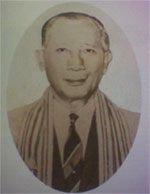
- Dr. Itthipol Padungchit, professor
- Somchai Thayanayong, lecturer (later associate professor)
- Lecturers Pakorn Adulphan and Rajit Watanasin
- Dr. Chaiwet Nuchprayoon, lecturer
Additionally, a number of foreign professors (about seven or eight) worked as special lecturers, consultants on international relations, advisors on education, and advisors on research. Additionally, the Fulbright Foundation offered outstanding assistance during that period, frequently sending academics and specialists to attend conferences or seminars hosted by the Computer Science Unit. Significant assistance was also given by the Military Research and Development Center, which deployed the IBM 1800 computer at Chulalongkorn University. They frequently dispatched foreign specialists to assist with early student instruction and training. Additionally, they asked System Development Computer Company to create a Thai language project and a time-sharing system.
The computer used.
There were two computer systems using Science Computer units at that time:
1. IBM 1800I computer
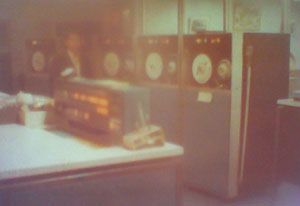
This first computer was set up for shared use at Chulalongkorn University by the Military Research and Development Center. It included a teletype golf ball-shaped console, a 2 × 2 MB magnetic disk, and 32 K words (16 KB) of memory. A printer with 1,200 LPM (lines per minute), a card reader with 600 CPM (cards per minute), and a punch card machine with 200 CPM were also included with the IBM 1800I.
2. IBM 1620I computer
IBM (Thailand) Co., Ltd. gave an IBM 1620II computer with 20 KB of memory, six Shrinko type machines, a 600 LPM printer, a 600 CPM card reader, and a 200 CPM punch-hole machine to the Computer Science Unit for teaching reasons.
Along with the computers, Chulalongkorn University also needs to use a number of additional devices, some of which were provided by Control Data Co., Ltd. and others of which are leased from IBM (Thailand) Co., Ltd.
Teaching and learning management
Undergraduate students from a variety of faculties, including the Faculty of Science and the Faculty of Engineering, have had access to computer science courses offered by the Computer Science Unit. Additionally, since 1969, it has offered a certificate program in computer science that has been approved by the Civil Service Commission. Many students have enrolled in this program and earned their certifications.
A Master of Science (M.Sc.) program in computer science was later created in 1971 since the Computer Science Unit was part of the Graduate School. Along with accepting graduate students with bachelor's degrees in nearly every topic, this program also thought about helping other universities with their educational needs.
Donation of computers by the Japanese government.
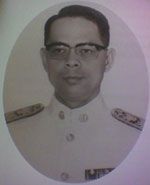
As the Computer Science unit's operations continued to advance, Chulalongkorn University asked Professor Boonchana Attakorn, who was then the Minister of Economic Affairs (now the Ministry of Commerce) and a member of the Chulalongkorn University Council, to approach the Japanese government for assistance. Nippon Electronics was tasked by the Japanese government with helping Chulalongkorn University by supplying an NEAC 2200/200 mid-range computer. In 1971, Field Marshal Thanom Kittikachorn, the prime minister at the time, oversaw the installation of this computer at Chulalongkorn University.
This modern computer system contains 32 KB of memory, a printer that can print 600 lines per minute, a card reader that can read 1,200 cards per minute, and a punch-card unit that can process 200 cards per minute. Additionally, it includes four 20 kilobytes per second (KBPS) tape drives. Dr. Kenji Kobayashi, Chairman of NEC Corporation, was instrumental in completing this project. As a thank you, Chulalongkorn University has asked His Majesty the King to grant him the Order of the Crown of Thailand, First Class.
Establishment
The Computer Science Unit's then-head, Professor Dr. Itthipol Padungchit, suggested in September 1972 that the unit be established as a separate department (equivalent to a department today). This issue was brought to the Academic Committee and the University Development Committee by Professor Arun Sortes, who was the Rector of Chulalongkorn University at the time. Both committees decided that the issue should be brought before the Deans' Conference, which then decided to restructure the Computer Science Unit's activities as follows:
1. The Faculty of Engineering should create a Department of Computer Science with a Bachelor of Science curriculum. When it is more prepared, the Faculty of Engineering will support its upgrade to a full department or faculty with no objections.
2. Look for appropriate computers to replace the Japanese NEAC 2200/200, whose contract expires in 1974. This will be financially supported by Chulalongkorn University.
Nevertheless, the Chulalongkorn University Council of Deans subsequently modified its first resolution as follows:
1. To disband the Computer Science Department.
2. To create the Faculty of Engineering's Department of Computer Engineering in order to teach computer science. This was the eighth department in the Faculty of Engineering and the first computer engineering department in Thailand.
3. To create a Computer Service Center—later renamed the Computer Service Institute—that would answer directly to the Rector and offer computer services for both education and administration. On December 12, 1978, a Royal Decree authorizing this was issued.
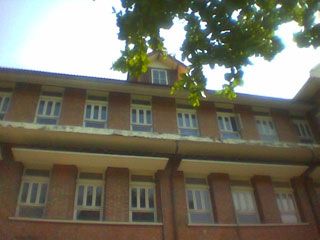
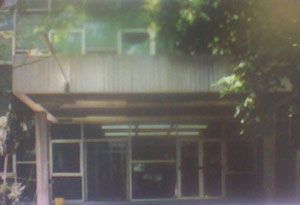
As a result, on June 9, 1975, the Department of Computer Engineering was ultimately approved. Even now, this date is regarded as the department's founding date. The Neelani Building, where the Computer Science Unit once stood, is home to the Department of Computer Engineering and the Computer Service Institute.
A voluntary transfer of all employees from the Computer Science Unit to the newly formed Department of Computer Engineering was also sought as a result of this shift. The move was approved by all staff members and faculty. The inaugural head of the department was then Associate Professor Dr. Sawasdi Saengbangpla, who was also the associate dean in charge of the Faculty of Engineering's computer-related operations.
Epilogue
In the academic year 1975, the department's first Bachelor of Engineering (Computer) degree program was offered. It allowed first-year engineering students who were going to start their second year to continue their studies at the department for an additional three years. At first, each cohort of about 20 students might be accepted by the department. Later, this grew to 40 students in the 8th cohort (CP 8) in the 1981 academic year and 100 students in the 22nd cohort (CP 22) in the 1995 academic year, where it still is today. This curriculum places a strong emphasis on software (60%) and hardware (40%). However, because the demand for students exceeded the department's capacity, students who chose to study in this department had to have the highest GPA in the faculty.
Later, in the academic year 1992, the department started to offer a postgraduate Master of Engineering (Computer Science) program that was open to students who had earned a Bachelor of Engineering (B.Eng.) degree in any subject, with a focus on thesis research. Additionally, the department started providing a doctorate-level Doctor of Engineering (Computer Science) program in the academic year 1998.
Regarding the Master of Science (Computer Science) program, the department replaced the defunct Computer Science Unit as the program's instructor. Exams for admission were held and applications were accepted. Later on, this program was made available in addition to the standard program as an evening or part-time course. In addition, the department introduced a Master of Science (Software Engineering) program in the 2002 academic year to meet the expanding demand for software engineering. Since its founding in 1975, the Computer Science certificate program has been discontinued; nonetheless, students who were accepted into the program are still taught by the department until they graduate.